Automating Vulnerability Scanning in Private Clouds
Set scope, choose on‑prem tools, automate discovery and CI/CD gates, and enforce remediation SLAs for private‑cloud vulnerability scans.
Read moreBlog posts in the Automation category

Set scope, choose on‑prem tools, automate discovery and CI/CD gates, and enforce remediation SLAs for private‑cloud vulnerability scans.
Read more
Compare how public cloud cuts live usage spend while private cloud boosts utilisation and lowers long‑term unit costs.
Read more
AI in private cloud: cost savings and faster ops, balanced against security and UK GDPR risks; requires audit trails and human oversight.
Read more
Trace failed runs in order — check CI stage, GitOps sync, cluster access and state, then fix drift with pre-flight checks.
Read more
Manage AWS IAM in Terraform: secure S3 state, use OIDC role assumption, enforce reviewed plans and run daily drift checks for least privilege.
Read more
Local, fast checks for HCL syntax, block structure and types; run init first, use variable validation, and fail fast in CI.
Read more
Automate the platform baseline, enforce policy-as-code, tag assets and embed cost controls to deploy private cloud reliably.
Read more
Use likelihood × impact scoring to prioritise testing, focus pre-release effort on top risks, and make evidence-based release decisions.
Read more
Unify GBP cloud and on‑prem spend, assign ownership, then automate rightsizing, scheduling and policy checks to cut hybrid cloud costs.
Read more
Place critical workloads at the edge, use cloud for off-site recovery, set RTO/RPO, automate failover and run regular DR tests.
Read more
Centralise billing, enforce same tags and owners, and match commitments to workloads to cut multi‑cloud waste and data egress costs.
Read more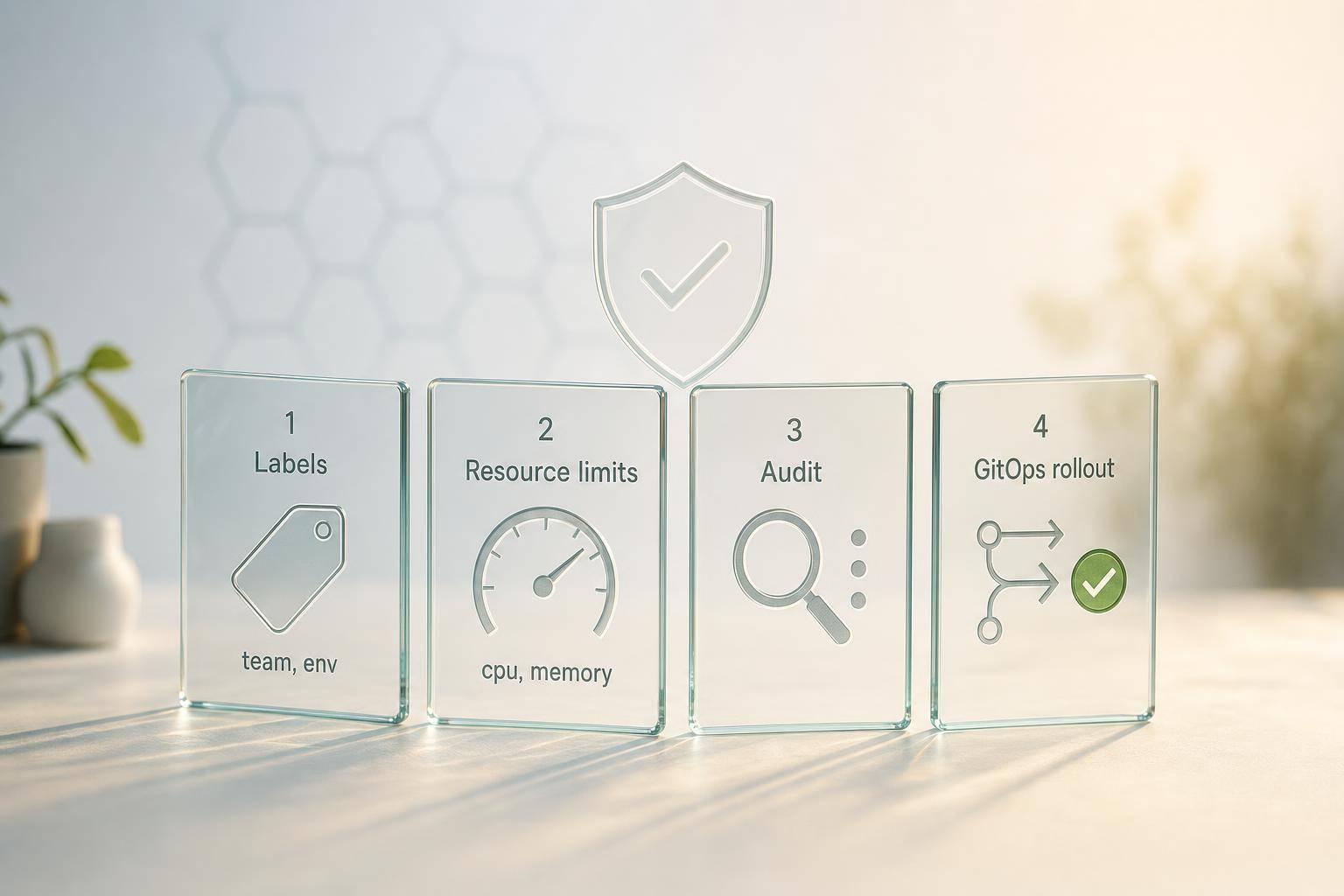
Install, test and run OPA Gatekeeper to enforce labels, resource limits, audit violations and roll out policies via GitOps.
Read more