SLOs and SLIs for Cloud-Native Applications
Use user-focused SLIs, set SLO targets and manage error budgets to guide releases, scaling and cloud spend.
Read moreBlog posts in the Cloud Optimization category

Use user-focused SLIs, set SLO targets and manage error budgets to guide releases, scaling and cloud spend.
Read more
Only move to cloud if TCO, ROI and payback over 36–60 months support it; compare baseline, cloud costs and migration effort.
Read more
Speed up IaC by splitting state, isolating shared resources, standardising modules, queuing runs and enforcing policy checks.
Read more
Plan data first, pick the right migration pattern, validate cutover with checks, enforce a single source of truth and optimise cost.
Read more
SSO keeps sign‑ins internal; federation lets other organisations' IdPs authenticate users for external and multi‑cloud access.
Read more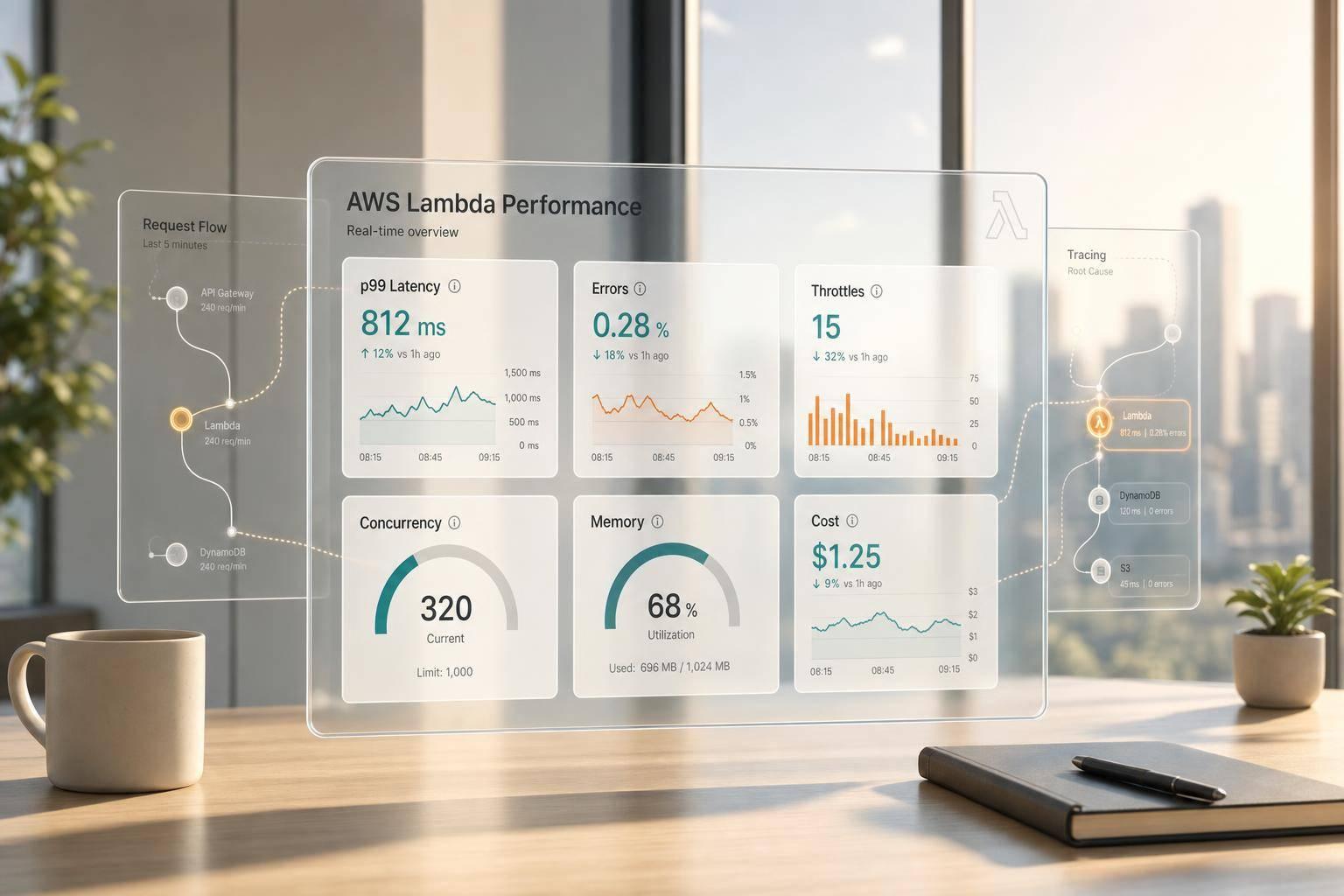
Prioritise p99 latency, errors, throttles, concurrency, memory and cost in CloudWatch; use X‑Ray for tracing and tune memory, timeout and concurrency.
Read more
Forecast capacity for repeat peaks, combine a predictive baseline with reactive HPA/KEDA, and apply cost guardrails and retraining.
Read more
Compare AWS EDP and Azure MACC: how to size commitments, manage exclusions, and time renewals to avoid costly contract shortfalls.
Read more
Hybrid cloud cost control fails when billing, usage and ownership data sit in silos—unify models, enforce tags and allocate shared spend.
Read more
Cut waste, shorten lead times and lower cloud spend with value stream mapping, CI/CD automation, WIP limits and cost controls.
Read more
Standardise fleet-wide Kubernetes policy in Git, deploy with GitOps, use Kyverno or Gatekeeper, audit then enforce, time-box exceptions.
Read more
Pay only for the multi-region resilience and speed you need: limit replication, keep writes local, optimise routing and test failover.
Read more