Cost Analysis for Multi-Cloud Workloads
Tactical guidance to reduce multi‑cloud spend: rightsizing, standardised tagging, centralised billing and egress optimisation.
Read moreBlog posts in the Resource Allocation category

Tactical guidance to reduce multi‑cloud spend: rightsizing, standardised tagging, centralised billing and egress optimisation.
Read more
Allocate shared cloud costs between dev and test with automated shutdowns, ephemeral environments, autoscaling and better tagging.
Read more
Azure Free Tier can quickly incur charges from deallocated disks, data egress and logging — see the hidden costs and how to prevent them.
Read more
How Kubernetes dynamic resource allocation cuts cloud waste, optimises GPU/CPU use and automates autoscaling with real-time metrics.
Read more
Align business units, enforce tagging and allocate shared services to map cloud spend, boost accountability and cut waste.
Read more
Monitor RI utilisation and coverage with Cost Explorer, Budgets and CUR; centralise purchases and set alerts to reduce wasted cloud spend.
Read more
How namespace-level resource quotas limit CPU, memory, storage and object counts, with monitoring, LimitRanges and cost-control tips.
Read more
Showback vs chargeback explained: when to use each cloud cost model, their pros and cons, and how to move from transparency to billed accountability.
Read more
Practical guidance on forecasting, regional allocation, load balancing, multi‑CDN and real‑time monitoring to optimise CDN capacity, performance and cost.
Read more
Use 12–18 months of normalised billing data, identify cost drivers, build driver-based forecasts, monitor continuously and review to cut variance to 5–12%.
Read more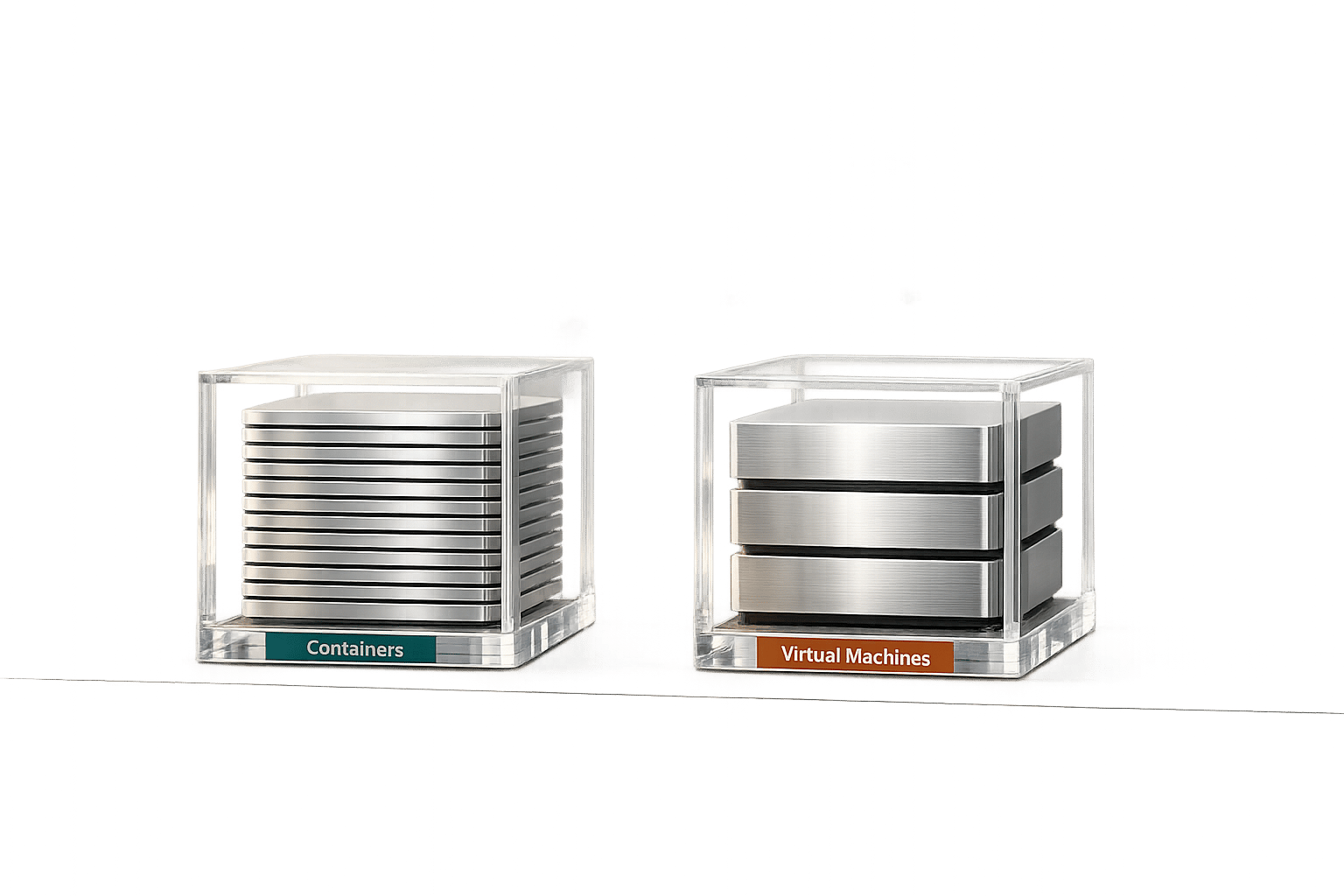
Compare containers and virtual machines by startup speed, memory/CPU overhead, application performance, density and isolation to inform deployment choices.
Read more
Compare HPA and Cluster Autoscaler to reduce Kubernetes costs: when to use each, how they interact, and best practices to maximise savings.
Read more