AI in Hybrid Cloud Security Automation
AI can reduce detection and response time across hybrid cloud — but only when tightly governed to prevent hallucinations, data leaks and risky automation.
Read moreBlog posts in the Devops Management category

AI can reduce detection and response time across hybrid cloud — but only when tightly governed to prevent hallucinations, data leaks and risky automation.
Read more
Choose an IdP that fits your apps, security needs, deprovisioning target and 3‑year cost; validate with a PoC and JML tests.
Read more
Forecast capacity for repeat peaks, combine a predictive baseline with reactive HPA/KEDA, and apply cost guardrails and retraining.
Read more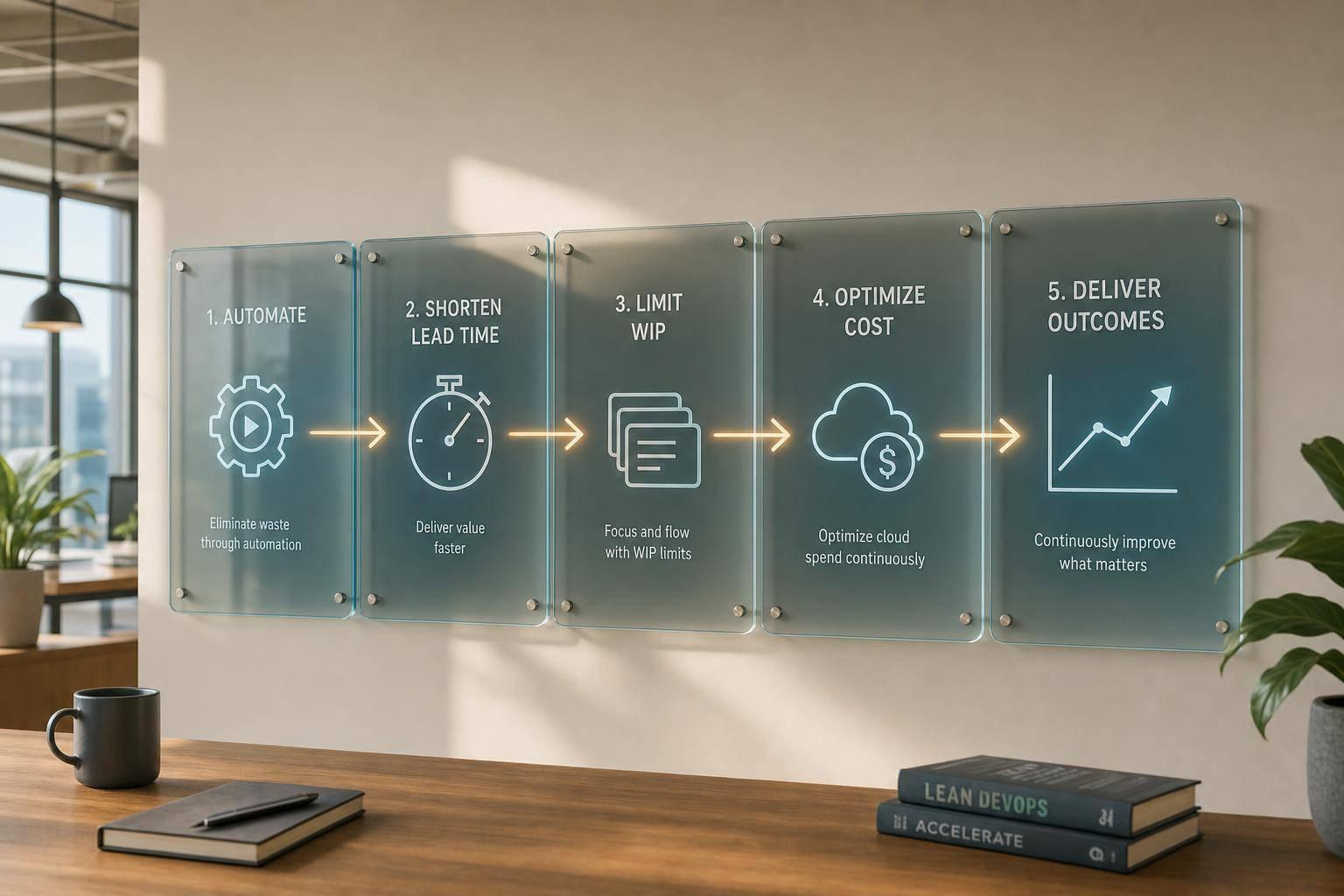
Cut waste, shorten lead times and lower cloud spend with value stream mapping, CI/CD automation, WIP limits and cost controls.
Read more
Third‑party CI/CD tools can expose secrets, enable mutable‑tag attacks and cloud takeovers; pin SHAs, adopt OIDC and enforce least privilege.
Read more
Standardise fleet-wide Kubernetes policy in Git, deploy with GitOps, use Kyverno or Gatekeeper, audit then enforce, time-box exceptions.
Read more
Scan images and manifests in CI, enforce policies at admission, and use runtime alerts to close the feedback loop.
Read more
Treat isolation, quotas, autoscaling and cost reporting as one system to safely run shared Kubernetes clusters.
Read more
Tight, time-limited, role-based IAM across staff and machine identities secures hybrid retail.
Read more
Standardise CI/CD with reusable templates, policy-as-code and cost controls to cut pipeline chaos, speed releases and reduce cloud spend.
Read more
Split containers into purpose-built networks and deny-by-default rules to shrink audit scope and protect regulated data.
Read more
Unify metrics, logs, traces and network paths; set tags, SLOs and ownership; run hybrid cloud monitoring as a daily practice.
Read more