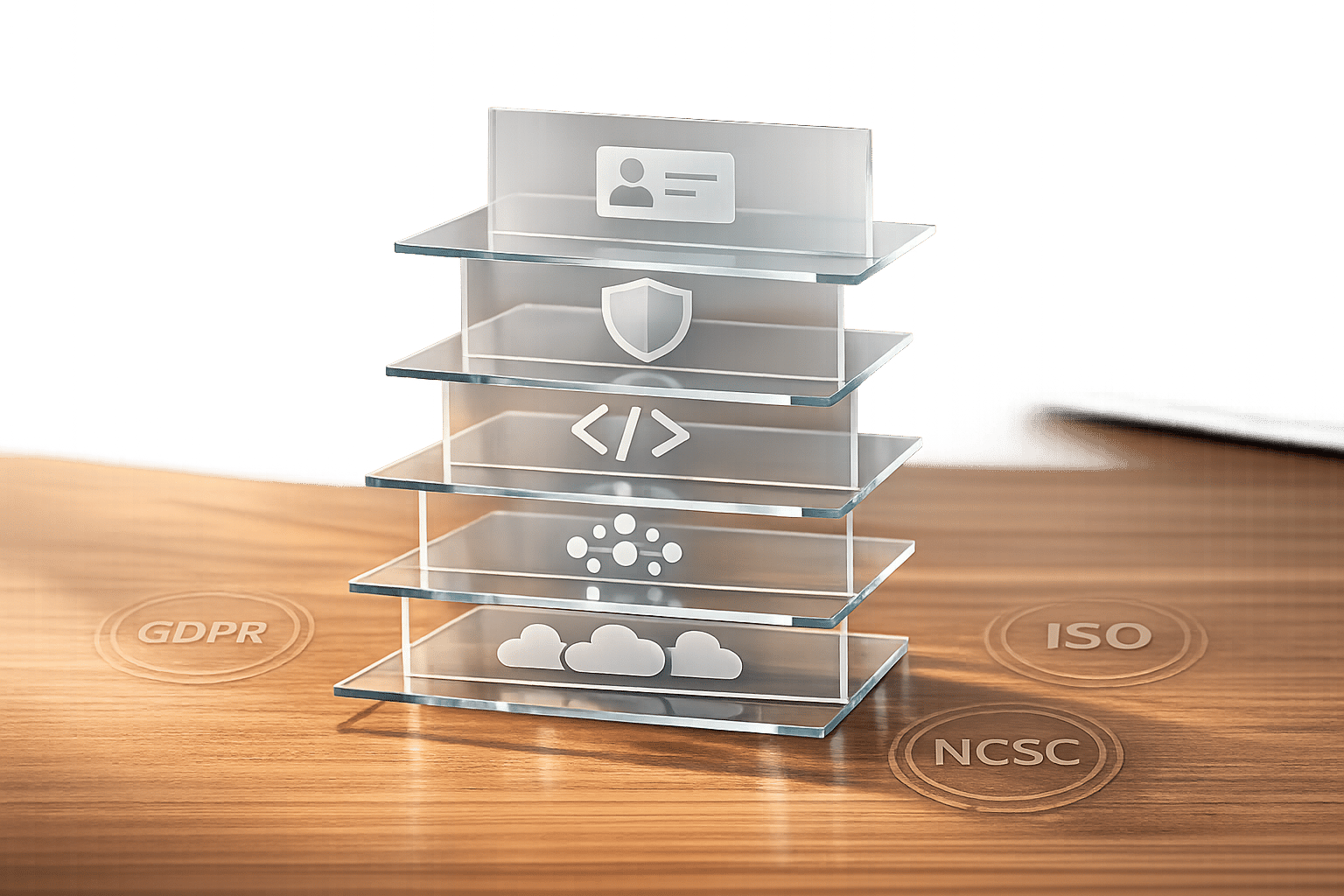
Organisations in the UK are increasingly adopting multi-cloud strategies to avoid vendor lock-in and manage costs. However, this approach complicates compliance with regulations like GDPR, ISO 27001, and NCSC guidelines. Each cloud provider has its own Identity and Access Management (IAM) system, creating challenges in maintaining consistent security policies and access controls.
Key takeaways:
- Multi-cloud compliance ensures security policies align with regulations across AWS, Azure, and Google Cloud.
- IAM policies are critical for controlling access and preventing risks like
privilege creep.
- Zero Trust models focus on identity-based access, using principles like least privilege and continuous verification.
- AI-driven tools optimise IAM policies by analysing actual usage, reducing over-permissioning, and improving compliance.
To simplify compliance, businesses should centralise identity management, automate policy enforcement, and adopt tools like Policy-as-Code frameworks. These strategies reduce risks, improve audit readiness, and streamline multi-cloud governance.
::: @figure 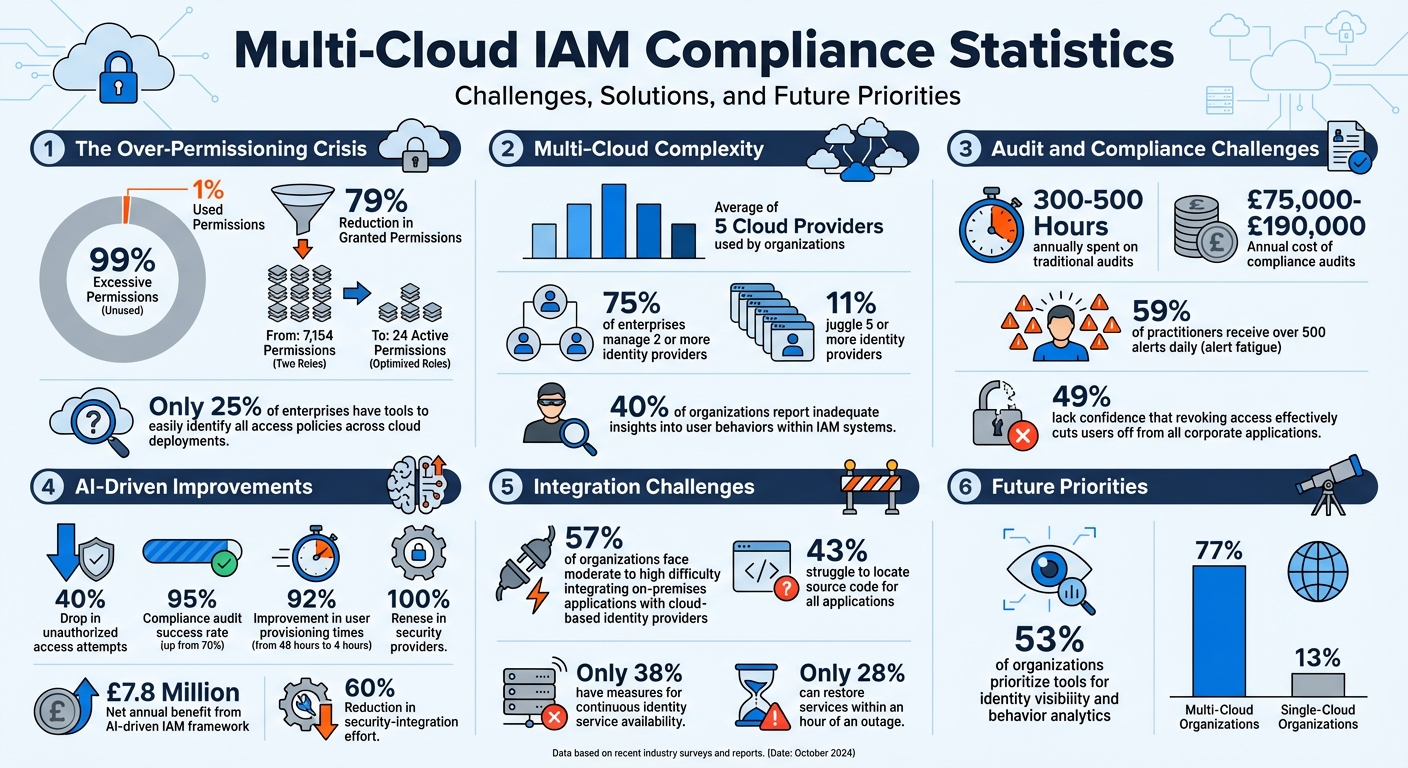 {Multi-Cloud IAM Compliance: Key Statistics and Impact Metrics}
:::
{Multi-Cloud IAM Compliance: Key Statistics and Impact Metrics}
:::
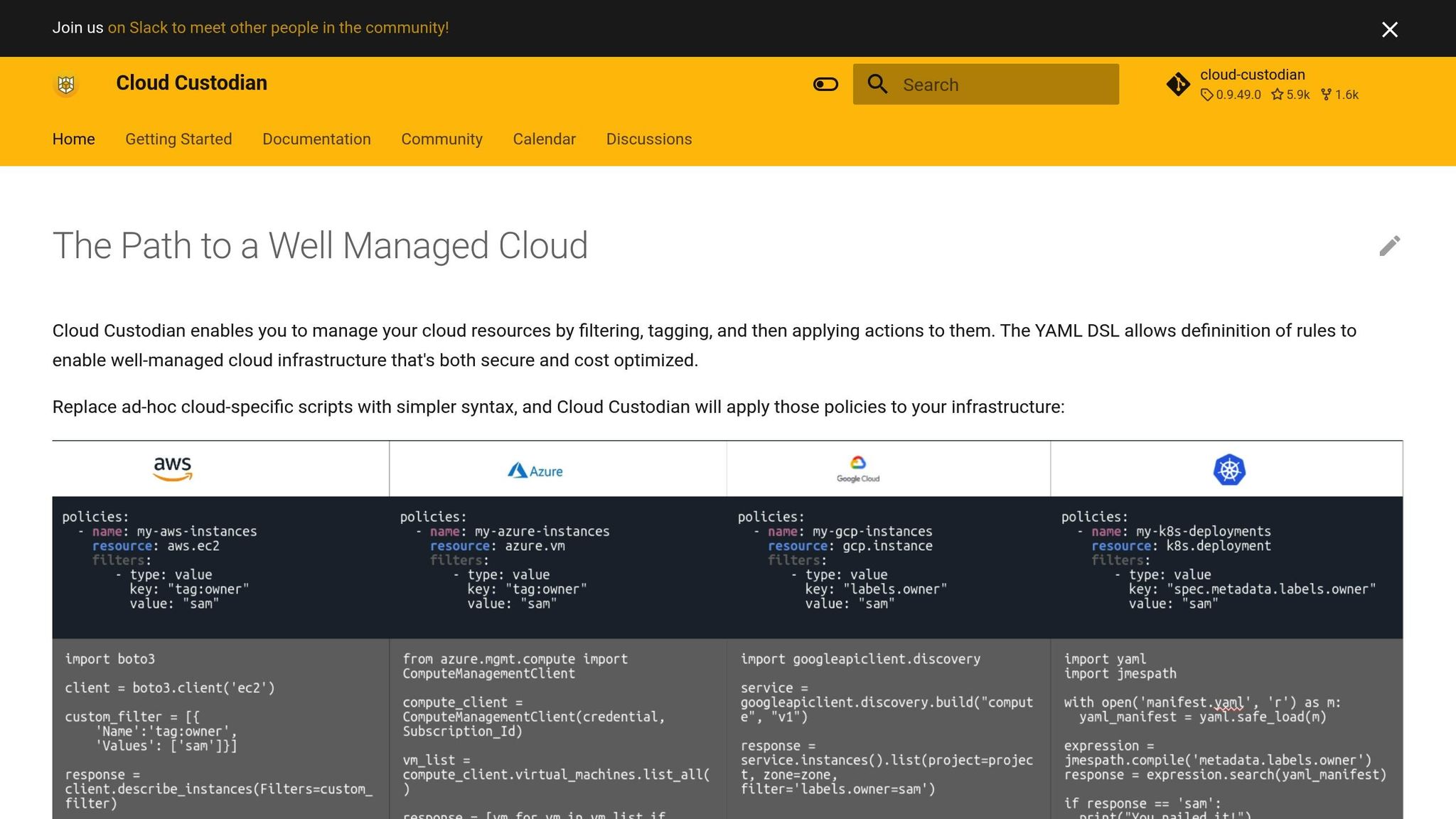
Continuous IAM Hygiene and Compliance: Cloud Custodian - Chris Watkins
Need help optimizing your cloud costs?
Get expert advice on how to reduce your cloud expenses without sacrificing performance.
Zero Trust IAM Models for Multi-Cloud Compliance
The challenges of fragmented Identity and Access Management (IAM) frameworks in multi-cloud setups have pushed organisations to rethink their security strategies. Zero Trust shifts the focus from network perimeters to identity, fundamentally changing how access is managed. Traditional security models, which rely on trusting anyone within the network perimeter, fall short in multi-cloud environments. As Ramaswamy Chandramouli from NIST explains, A key paradigm shift in ZTAs is the change in focus from security controls based on segmentation and isolation using network parameters (e.g., Internet Protocol (IP) addresses, subnets, perimeter) to identities
[5]. Instead of asking, Where is this request coming from?
, Zero Trust asks, Who is making this request, and should they have access right now?
This identity-centric approach enables more precise and context-aware access controls, which are essential for securing multi-cloud environments.
Principles of Zero Trust IAM
At its core, Zero Trust operates on the principle of never trust, always verify
[3]. Every access request - whether from a user or a machine identity like a CI/CD pipeline - must be authenticated and authorised, regardless of its origin. This model incorporates the Principle of Least Privilege (PoLP), ensuring that users and services only receive the permissions they absolutely need to perform their tasks. By limiting access in this way, organisations can significantly reduce the risks associated with compromised credentials [7].
Another essential element is continuous verification. Unlike traditional systems that verify identity only at login, Zero Trust continuously evaluates user identity, device status, and contextual factors throughout a session [9]. For example, if a user starts accessing resources from an unusual location or shows other suspicious behaviour, the system can prompt for additional authentication or even terminate the session. Micro-segmentation further strengthens security by isolating workloads into distinct zones, making it harder for attackers to move laterally across cloud environments [4].
Benefits of Zero Trust for Multi-Cloud Compliance
For organisations in the UK, where regulations like GDPR, ISO 27001, and NCSC guidelines are critical, Zero Trust provides a practical pathway to compliance. By enforcing identity-based controls at the resource or API level, organisations can maintain a consistent security framework across multiple cloud platforms. One standout measure is multi-factor authentication (MFA), which remains one of the most effective tools for preventing account takeovers in multi-cloud IAM [7]. Additionally, Just-in-Time (JIT) access minimises risks by granting privileged access only for the specific timeframes required for particular tasks [9].
Implementation Strategies
To fully realise the benefits of Zero Trust, organisations must adopt deliberate and well-structured implementation strategies. Start by centralising identity management, using a single Identity Provider (IdP) like Okta or Azure AD as your single source of truth.
This approach eliminates credential sprawl and simplifies processes like onboarding and offboarding [7]. When creating IAM policies, begin with zero permissions and only add the actions that are strictly necessary - avoid using overly broad permissions like *:*.
Automation plays a vital role in maintaining consistency and efficiency. Tools like Terraform, combined with Open Policy Agent (OPA), can help establish a unified control plane that enforces security rules consistently across AWS, Azure, and GCP. This ensures configurations are standardised and can be quickly rolled back if needed. Additionally, implementing Software-Defined Perimeters keeps sensitive resources hidden from public internet exposure, making them accessible only to authenticated and authorised users [8]. For further guidance, NIST SP 1800-35 outlines 19 Zero Trust implementation examples, offering practical insights into managing multi-cloud resources securely [6].
Unified Policy Governance and Enforcement Strategies
To tackle the complexities of multi-cloud compliance, a unified governance model is critical. Without it, managing IAM policies across platforms like AWS, Azure, and GCP becomes fragmented, weakening security controls and complicating audits. Organisations are left with two choices: centralise governance through a unified control plane or endure the operational challenges of decentralised management. This decision isn't just theoretical - it directly affects compliance readiness and operational costs.
Centralised vs Decentralised IAM Governance
Centralised governance uses a single Identity Provider (IdP) such as Okta or Azure AD to manage access across multiple cloud platforms. Instead of juggling separate passwords and access keys for each cloud, organisations rely on federation protocols like SAML or OIDC to issue temporary credentials [7]. This approach integrates IAM policies into version-controlled repositories like GitHub, deploying them automatically with tools such as ArgoCD or Flux [11].
On the other hand, decentralised governance leads to siloed logs and manual efforts to compile compliance evidence. This fragmented approach often results in audit failures and higher remediation costs. By centralising governance and automating policy deployment, organisations can significantly improve both security and compliance outcomes.
Policy Automation and Standardisation
Policy-as-Code (PaC) redefines governance by converting rules into machine-readable code. This code can be tested, versioned, and deployed automatically through CI/CD pipelines. Tools like Open Policy Agent (OPA) allow organisations to create a single logical policy - for example, for storage
- that translates into specific rules for AWS S3, Azure Blobs, and GCP Buckets [1]. This abstraction reduces complexity and minimises human error.
Automation makes IAM predictable - and that's what security needs.
- Danny Perry, Co-Founder and Content Director, Clutch Events [11]
Automated IAM optimisation delivers clear, measurable results. AI-driven tools can analyse permission usage over 90 days, identifying unused privileges and consolidating them into streamlined roles. In one case, creating just two optimised roles reduced granted permissions by 79% [12]. For organisations in the UK, this approach not only enhances security but also simplifies compliance by generating audit-ready evidence automatically, shifting from manual audits to continuous monitoring [[2]](https://www.acejournal.org/cloud security/compliance/2025/06/26/continuous-compliance-in-multi-cloud.html).
Embedding policy checks directly into deployment pipelines is another key step. Tools like Conftest and Checkov scan infrastructure code before it’s deployed, blocking non-compliant resources automatically [1][[2]](https://www.acejournal.org/cloud security/compliance/2025/06/26/continuous-compliance-in-multi-cloud.html). However, manual changes can still cause configuration drift, making continuous scanning essential to maintain a secure baseline. Standardisation through these practices ensures consistent compliance across multi-cloud environments.
Such automated and standardised strategies pave the way for tangible success, as shown in the following case studies.
Case Studies of Unified Governance
Organisations adopting unified governance report significant gains in both security and efficiency. Luke Christopherson, a Software Engineer, shared:
The Teleport Infrastructure Identity Platform allows our engineers to securely access the infrastructure they need to do their jobs without getting in the way of productivity.
[10]
In regulated industries, unified governance isn't optional. Brendan Germain, a Systems Reliability Engineer at an international stock exchange, explained:
Teleport allows us to comply with the regulatory hurdles that come with running an international stock exchange.
[10]
These examples highlight the advantages of moving away from static credentials to short-lived, cryptographic identities issued at runtime. This shift reduces risk while maintaining developer productivity [10]. The takeaway is clear: organisations that treat IAM policies as software - storing them in version control, automating deployments, and continuously monitoring for drift - achieve stronger security and reduced operational overhead.
AI-Driven IAM Policy Optimisation Techniques
Artificial intelligence has reshaped Identity and Access Management (IAM) policy design, automating what was once a manual, error-prone process. By learning from actual user behaviour, AI tools can analyse historical permission usage - often over a 90-day period - to identify the gap between permissions granted and those actually used [12]. This directly addresses the persistent issue of over-permissioning, a common security risk in multi-cloud environments.
How AI Enhances IAM Policy Design
Instead of relying on organisational structures, AI clusters users and machine identities based on their access patterns. This behavioural grouping allows the creation of a smaller, more manageable set of policies, avoiding the need for hundreds of customised ones [12]. For instance, an analysis of Azure administrator roles revealed that out of 7,154 permissions granted, only 24 were used - leaving over 7,100 unnecessary permissions that increased risk [12].
By applying the Pareto principle, AI focuses on the 20% of changes that yield 80% of security improvements [12]. Orca Security highlights the importance of simplicity in IAM design:
It's better to have 4 policies you understand for 4 groups of users, rather than 100 custom-tailored policies you can't even begin to control.[12]
Modern platforms also integrate with Infrastructure-as-Code tools, generating remediation instructions for systems like Terraform or Pulumi. This ensures immediate, version-controlled fixes and extends to automated remediation, making policy enforcement more efficient. The shift from manual auditing - which often takes weeks or months - to real-time analysis marks a major advancement in IAM governance.
AI in Policy Auditing and Monitoring
AI doesn't stop at initial policy optimisation; it also enables continuous monitoring to address anomalies proactively. Machine learning models calculate real-time access risk scores, allowing adaptive authorisation decisions at runtime [13]. This method has shown measurable results: unauthorised access attempts drop by 40%, while compliance audit success rates increase from 70% to 95% [13].
One example of AI's impact comes from a twelve-month deployment of a Contextual Authorisation Framework on Microsoft Azure. By combining machine learning models like Isolation Forest and XGBoost with Open Policy Agent, the system processed 2.1 billion requests and achieved a 60% reduction in security-integration effort. This resulted in a net annual benefit of £7.8 million through fraud prevention and reduced Security Operations Centre (SOC) workload [13]. Bharadwaja Reddy Chirra, a researcher in the field, notes:
AI-driven IAM can significantly improve both security and operational efficiency, setting a new paradigm for access management in complex cloud ecosystems.[13]
Operational efficiency gains are also evident in user provisioning times, which have dropped from 48 hours to just 4 hours - a 92% improvement [13]. Additionally, AI quickly identifies and flags inactive or zombie
identities for deactivation, reducing the attack surface without disrupting productivity [12].
Best Practices for Using AI in IAM
For UK organisations adopting AI-driven IAM, simplicity and manageability should take precedence over perfection. Start with a 90-day audit to identify unused permissions, then use AI clustering to group identities based on actual behaviour, creating more accurate role definitions [12].
Policy abstraction is another key strategy, especially in multi-cloud environments. Tools like Open Policy Agent can help create a cloud-agnostic policy layer, enabling single logical rules for resources like storage
to apply across AWS, Azure, and GCP simultaneously [1]. This unified approach avoids the fragmentation that can hinder compliance.
Integrate AI recommendations into Infrastructure-as-Code workflows to ensure fixes are both automated and version-controlled [12][1]. For larger environments, exporting machine learning insights to platforms like BigQuery can help analyse aggregate data and uncover patterns in resource usage [14]. Embedding AI-driven policy checks into CI/CD pipelines - often referred to as shift-left governance
- helps catch non-compliant IAM configurations before they reach production [1].
These practices align with Zero Trust principles and unified policy governance, enabling continuous verification rather than relying on periodic audits. As Orca Security points out:
It's nearly impossible for humans to adequately audit identity and access privileges to the level needed for security. Having an automated platform to streamline policy creation, provide continuous monitoring, and support enforcement is vital.[12]
Compliance Standards and Auditing in Multi-Cloud IAM
Overview of Compliance Frameworks
For UK businesses navigating multi-cloud environments, compliance with frameworks like GDPR, ISO 27001, and PCI DSS is non-negotiable. UK GDPR, in particular, demands strict data minimisation practices and ensures personal data is only accessed when absolutely necessary. It also mandates that data residency remains within the UK or EU. ISO 27001 provides a framework for Information Security Management Systems (ISMS), with IAM-related controls such as Annex A.8.9 (Configuration Management), A.8.15 (Logging), and A.8.24 (Use of Cryptography) playing a key role.
For organisations dealing with payment data, PCI DSS enforces principles like least privilege, multi-factor authentication, and restricted access to cardholder data environments. The NCSC Cloud Security Principles and Cyber Assessment Framework (CAF) offer specific guidance for UK critical infrastructure. Additionally, SOC 2 Type II measures internal controls over a span of 6–12 months, focusing on Security, Availability, Processing Integrity, Confidentiality, and Privacy. Businesses operating in the EU must also align with directives like NIS2 and DORA, which heighten cybersecurity requirements for essential services and financial institutions.
In multi-cloud setups, while cloud providers handle physical security, the responsibility for IAM configurations, encryption, data classification, and network controls falls squarely on the customer. A single misstep - such as a misconfigured security group or an overly permissive IAM role - can jeopardise compliance, regardless of the provider's certifications. To address these challenges, organisations need agile auditing processes to maintain their compliance standards.
Auditing IAM Policies for Multi-Cloud Compliance
Maintaining security in a multi-cloud environment requires rigorous IAM auditing, grounded in established compliance frameworks. Traditional audits, however, are resource-intensive, often taking 300–500 hours annually and costing between £75,000 and £190,000 [15]. Even with this investment, point-in-time audits offer limited protection. As Complimetric aptly notes:
A configuration change on day 16 of a 365-day audit period can invalidate your compliance posture for the remaining 349 days[15].
To overcome these limitations, real-time monitoring should replace periodic audits. Start by reviewing wildcard permissions (* in Action or Resource elements) and ensure these are limited to administrative roles [18]. Incorporate IAM validation into development processes using tools like IDE plugins and pre-commit hooks to catch issues early. The Microsoft Azure Well-Architected Framework underscores this approach:
Identity is always the primary perimeter. This scope doesn't just include the edges of your workload. It also includes individual components that are inside your workload[19].
Automated tools can further enhance auditing by creating immutable, timestamped records that link technical controls to compliance requirements. For example, an S3 encryption check could be tied directly to SOC 2 CC6.1 [15].
Tools and Services for Compliance Auditing
To streamline these efforts, specialised tools offer automated, version-controlled solutions that reduce manual workload. Modern platforms address the challenge of alert fatigue - an issue faced by 59% of practitioners who receive over 500 alerts daily [17]. Agentless auditing solutions like SideScanning provide comprehensive visibility across multi-cloud environments without requiring software installation on individual virtual machines. Tools like Orca Security can map alerts directly to the NCSC Cyber Assessment Framework, making them particularly valuable for UK critical infrastructure [17].
Policy-as-Code frameworks, such as Open Policy Agent, Terraform Sentinel, and Cloud Custodian, enable the creation of version-controlled compliance rules that can be automatically tested and enforced. Automating the Joiners, Movers, Leavers (JML) process is another critical step, helping to prevent privilege creep by ensuring access rights are updated or revoked as roles change. Paul Dumbleton, Enterprise Information Security Team Manager at HubSpot, highlighted the benefits of modern solutions:
Before, when we didn't have a modern solution, we felt stagnant. Today, we're in a much better place[16].
For organisations needing tailored strategies, Hokstad Consulting provides expertise in cloud cost engineering and DevOps transformation. Their services integrate compliance considerations into infrastructure design, leveraging AI-driven policy auditing and continuous monitoring. This approach not only reduces compliance costs and security risks but also ensures regulatory requirements are met across AWS, Azure, and GCP environments. By adopting these measures, businesses can design IAM policies that secure their multi-cloud setups while simplifying compliance across platforms.
Research Findings on Multi-Cloud IAM Limitations
Common IAM Limitations in Multi-Cloud Setups
Recent studies bring to light additional challenges in multi-cloud Identity and Access Management (IAM). A key issue is the lack of standardisation across vendors. Each cloud provider uses distinct frameworks - for instance, AWS relies on Roles, GCP employs Service Accounts, and Kubernetes uses RBAC. This lack of uniformity means security teams often have to duplicate policies across platforms, leading to inefficiencies. Compounding this, credentials can be transferred without retaining their original constraints, creating further vulnerabilities[10].
Another major concern is the overprovisioning of permissions. Research shows that 99% of cloud users, roles, services, and resources are granted excessive permissions that often go unused[21]. This issue becomes even more pronounced in multi-cloud environments, where the sheer volume of roles makes auditing a daunting task. Alarmingly, only 25% of enterprises have the tools to easily identify all access policies across their cloud deployments[23]. On average, organisations distribute their resources across nearly five cloud providers, and 75% of enterprises manage two or more identity providers - with 11% juggling five or more[22][24].
Visibility remains a critical blind spot. About 40% of organisations report inadequate insights into user behaviours within their IAM systems[22]. Additionally, 49% lack confidence that revoking a user’s access in their identity system effectively cuts them off from all corporate applications and data[23]. As Strata Identity aptly summarises:
Visibility of app hosting and access policies are 'cloudy' for enterprises using multi-cloud
[23].
Legacy systems add another layer of complexity. A significant 57% of organisations face moderate to high difficulty when integrating on-premises applications with cloud-based identity providers[22]. These limitations underscore the urgent need to refine IAM policies to address the unique challenges of multi-cloud environments.
Insights from Recent Research Studies
Findings from NIT Trichy highlight how distributed architectures often lead to fragmented policies, inconsistent authentication, and visibility gaps. Srikanth Gurram explains:
The complex nature of these distributed architectures often creates fragmented security policies, inconsistent authentication mechanisms, and critical visibility gaps that adversaries actively exploit
[24].
This concern is echoed by Unit 42 at Palo Alto Networks, which notes:
misconfigurations tend to be at the centre of the majority of known cloud security incidents, and poorly written identity and access management (IAM) policies are often the culprits
[21].
Consistency in identity policies is especially critical for multi-cloud setups. Research indicates that the demand for consistent policies is six times higher for organisations using multiple clouds compared to those with single-cloud deployments (77% versus 13%)[23]. However, operational complexity poses significant barriers. For example, 43% of enterprises struggle to locate the source code for all their applications, which stifles efforts to modernise identity frameworks[23]. Moreover, only 38% of organisations have measures in place to ensure continuous identity service availability, and just 28% can restore services within an hour of an outage[22]. These gaps not only heighten security risks but also jeopardise business continuity and compliance.
Future Trends in IAM Policy Design
One emerging trend is the shift towards secretless authentication. As Saurabh Deochake points out:
static, long-lived credentials for workload authentication create untenable security risks that violate Zero-Trust principles
[20].
To address this, the industry is adopting cryptographically verified, ephemeral tokens through mechanisms like OIDC and Workload Identity Federation. These tokens are issued at runtime, replacing the need for static API keys[20].
Another promising development is identity orchestration, which aims to tackle multi-cloud fragmentation. By creating a distributed abstraction layer - often referred to as an Identity Fabric
- this approach ensures consistent policy management across hybrid and multi-cloud environments without requiring application code changes[23].
AI-driven analytics is also gaining momentum. Over half (53%) of organisations are prioritising tools that enhance identity visibility and behaviour analytics. These systems use contextual data to detect policy violations and anomalies in real time[22]. Adaptive authentication, which adjusts verification processes based on risk levels, is becoming a cornerstone of Zero Trust architectures. This approach ensures that every request, regardless of its origin, undergoes authentication and authorisation[7][24].
Conclusion
From Zero Trust principles to AI-powered policy management, the strategies outlined here provide a solid foundation for achieving effective multi-cloud IAM compliance.
Best Practices for Multi-Cloud IAM Compliance
For UK businesses, following a clear IAM compliance roadmap is crucial when working in multi-cloud environments. One of the key steps is centralising identity management using a single Identity Provider (IdP) like Okta or Entra ID. This creates a unified source of truth, helping to prevent identity sprawl. It also ensures compliance with GDPR's data minimisation requirements, while keeping administrator and IdP logs within UK or EU regions.
Implementing the principle of least privilege is non-negotiable. Using Cloud Infrastructure Entitlement Management (CIEM) tools can help organisations right-size roles and permissions. For example, in a 2025 demonstration, Orca Security's IAM Policy Optimiser reduced unused permissions in an Azure environment by 79%, cutting down 7,154 permissions across 7 administrator roles to just 24 active ones[12]. As Orca Security puts it:
It's better to have 4 policies you understand for 4 groups of users, rather than 100 custom-tailored policies you can't even begin to control.[12]
Consistency is another critical factor. Tools like Open Policy Agent or Terraform enable Policy-as-Code enforcement across platforms like AWS, Azure, and GCP. Automating identity lifecycle management - by linking provisioning and de-provisioning to HR systems - prevents privilege creep and ensures immediate access revocation when employees leave. Adding Just-In-Time access for elevated permissions ensures that these privileges expire automatically after use. To maintain a unified compliance trail, consolidating audit logs into platforms like Microsoft Sentinel is essential for meeting ISO 27001 and NCSC standards.
These practices tackle the fragmented governance and over-provisioning issues that often plague multi-cloud environments.
How Hokstad Consulting Can Help
Bringing these practices to life often requires expert guidance, and that's where Hokstad Consulting steps in.
Hokstad Consulting specialises in optimising DevOps workflows, cloud infrastructure, and multi-cloud compliance strategies. Their cloud cost engineering services can reduce expenses by 30–50%, while ensuring IAM governance frameworks align with UK regulations. They support businesses in achieving seamless cloud migrations with zero downtime, establishing centralised identity management and federated authentication across hybrid and multi-cloud setups.
Their expertise includes deploying Policy-as-Code frameworks, integrating IAM checks into CI/CD pipelines, and implementing AI-driven real-time policy monitoring. For organisations using private cloud environments, Hokstad Consulting designs identity orchestration layers that enable consistent policy enforcement without requiring application code changes. Their flexible engagement models, including retainer-based support or a no savings, no fee
approach, ensure tailored solutions for even the most complex multi-cloud compliance challenges.
Final Thoughts on IAM in Multi-Cloud Environments
The move towards Zero Trust architectures, AI-driven policy optimisation, and ephemeral credentials is no longer optional - it's essential. Gartner’s prediction that 99% of cloud-related security failures by 2025 will stem from human error underscores the need for well-designed IAM policies[25]. Businesses that centralise governance, automate enforcement, and adopt dynamic credential management are better equipped to navigate the complexities of multi-cloud environments. The future of IAM lies in treating identity as a seamless, interconnected framework - where every access request is rigorously authenticated and authorised, regardless of its origin. This approach not only reduces risk but also streamlines operations in an increasingly interconnected digital world.
FAQs
How do I pick one IdP for multi-cloud IAM?
To pick the right Identity Provider (IdP) for multi-cloud IAM, go for a centralised system that offers identity federation, Single Sign-On (SSO), and temporary credentials across platforms like AWS, Azure, and Google Cloud. It’s essential that the IdP works seamlessly with your existing infrastructure, supports multi-factor authentication (MFA), and automates identity lifecycle management. Having a unified IdP not only streamlines governance but also strengthens security and helps meet compliance requirements, such as GDPR in the UK.
What’s the quickest way to remove over-permissioned access?
The fastest method to tackle over-permissioned access is by leveraging service last accessed data. This data pinpoints unused permissions, making it easier to revoke them and refine IAM policies without much hassle. By routinely reviewing this information, you can keep your policies lean and ensure compliance, even in complex multi-cloud setups.
How can we prove compliance continuously, not yearly?
Continuous compliance depends on automated, real-time monitoring to keep cloud configurations and operations in line with regulatory standards. Effective strategies include policy-as-code, which embeds governance rules directly into code; drift detection, which identifies misconfigurations early; and automated evidence generation, which creates audit-ready reports without manual effort. Tools like Cloud Security Posture Management (CSPM) and AI-powered validation play a crucial role, helping organisations adhere to standards such as GDPR and ISO 27001 while strengthening security and streamlining operations.