Managing deployment costs is critical for controlling cloud expenses and improving efficiency. Deployment costs include resources for CI/CD pipelines, testing environments, production rollouts, and rollbacks. Without tracking these, businesses risk overspending by 20–30% due to inefficiencies like overprovisioned clusters or idle resources.
Key tools for analysing deployment costs:
- Hokstad Consulting: Custom cloud cost reduction services, offering pre-deployment cost estimates and automation to cut costs by 30–50%.
- Infracost: Integrates with Terraform for live cost estimates during
terraform plan, helping teams avoid costly changes. - OpenCost & Kubecost: Kubernetes-specific tools for tracking pod- and namespace-level costs, with savings of up to 40%.
- AWS Cost Explorer: Offers historical data and trend analysis for budget management.
- Koku: Tracks costs in hybrid and OpenShift environments, aligning spend with budgets.
For UK businesses, these tools support GBP formatting, VAT-inclusive reporting, and compliance with local regulations like Making Tax Digital. By rightsizing resources and shutting down idle environments, companies can save 20–40% or more annually.
Quick tip: Start by integrating cost tracking into CI/CD workflows to monitor expenses in real-time and optimise deployments effectively.
Measuring All the Costs with OpenCost Plugins - Alex Meijer, Stackwatch
Tools for Deployment Cost Analysis
::: @figure 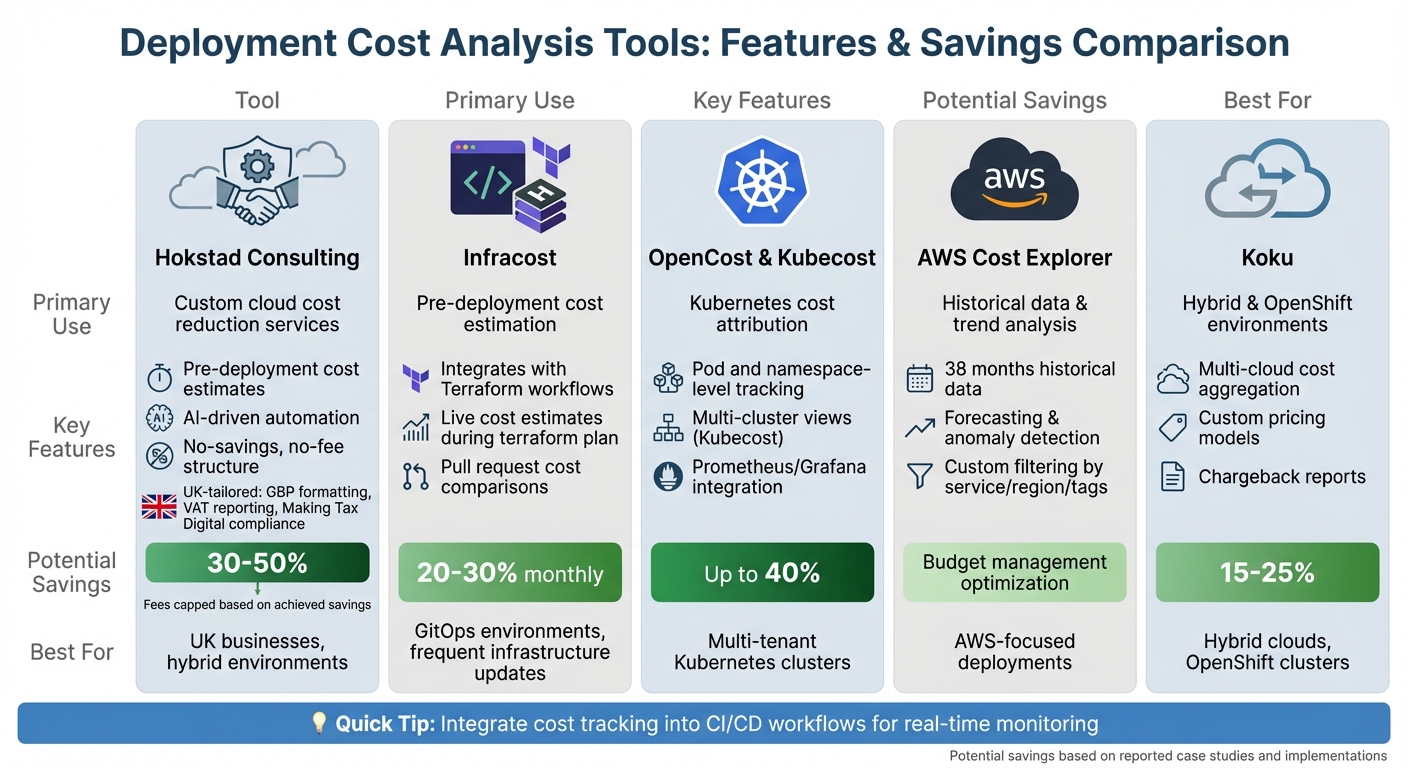 {Deployment Cost Analysis Tools Comparison: Features and Savings Potential}
:::
{Deployment Cost Analysis Tools Comparison: Features and Savings Potential}
:::
Hokstad Consulting for Deployment Cost Engineering
Hokstad Consulting provides customised DevOps transformation and cost engineering services aimed at reducing deployment costs. Their strategy includes setting up cost monitoring frameworks that track expenses throughout the deployment lifecycle - covering everything from CI/CD pipelines to production rollouts. For UK businesses, they offer solutions tailored to local regulations, incorporating features like GBP formatting, metric-based reporting, and compliance with Making Tax Digital. Their expertise spans public, private, hybrid, and managed hosting environments, employing AI-driven methods that can reduce infrastructure costs by 30–50% while enhancing deployment efficiency. Hokstad's flexible engagement models include a no-savings, no-fee structure, where fees are capped based on achieved savings, making their services accessible without upfront costs. Additional tools complement this approach, offering detailed pre-deployment and Kubernetes-specific cost insights.
Infracost for Pre-Deployment Cost Estimation
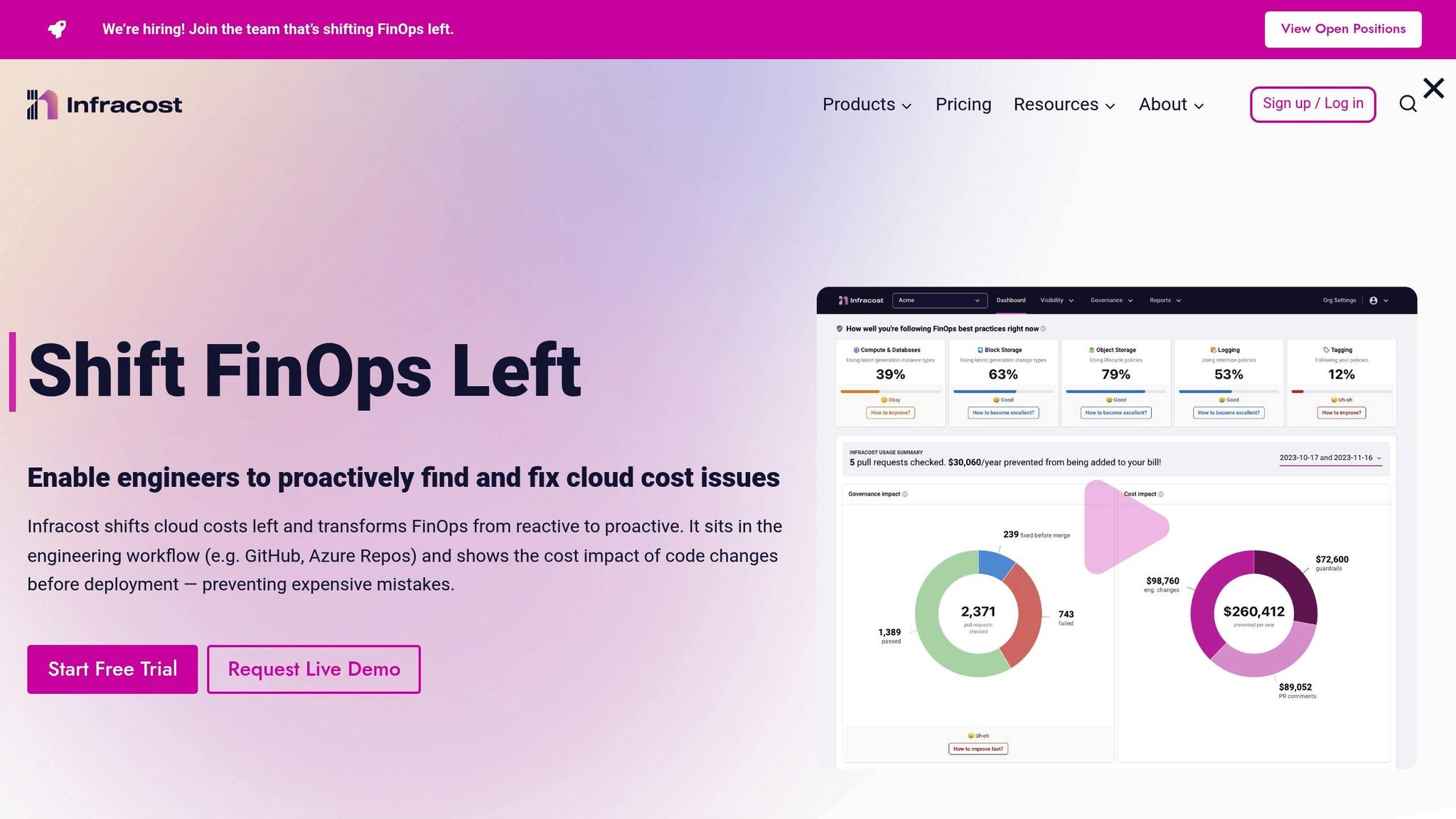
Infracost integrates seamlessly into Terraform workflows, providing live cost estimates during terraform plan. It uses cloud pricing data to generate cost comparisons, showing whether proposed changes will raise or lower expenses. The tool embeds cost details into pull requests via GitHub Actions or GitLab CI, helping teams spot costly changes before they are merged. By identifying overprovisioned resources during code reviews, teams have reported 20–30% monthly savings[2]. Infracost supports modules, variables, and workspaces, making it particularly useful in GitOps environments where frequent infrastructure updates require constant cost awareness. Beyond pre-deployment estimates, complementary Kubernetes tools offer granular cost breakdowns.
OpenCost and Kubecost for Kubernetes Cost Attribution
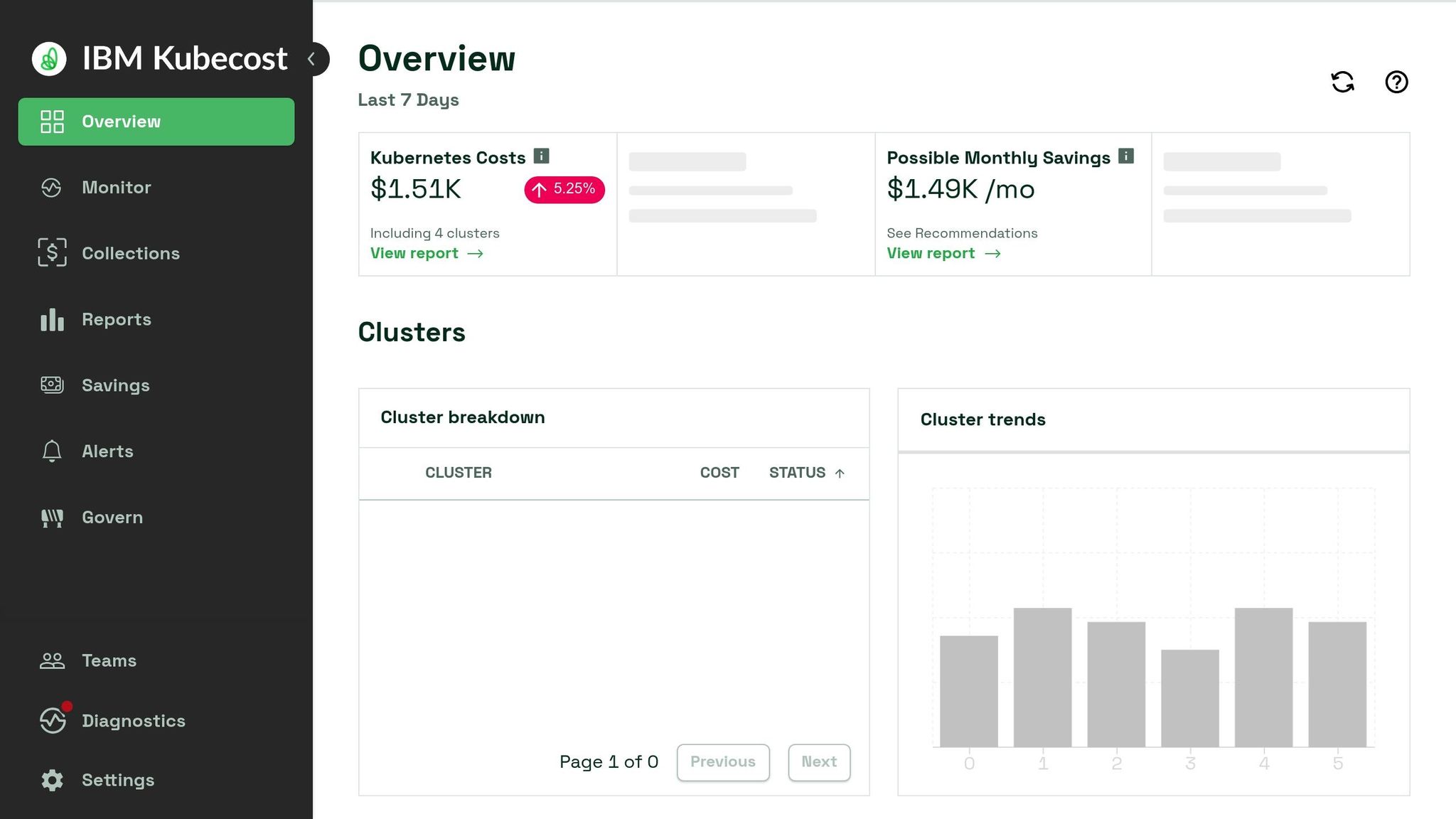
OpenCost delivers detailed cost allocation in Kubernetes environments by mapping compute, storage, and network expenses to specific pods, namespaces, or controllers. It gathers node and billing data to provide precise cost insights and integrates with Prometheus and Grafana for dashboards and alerts, making it ideal for multi-tenant clusters. On the other hand, Kubecost offers similar functionality but includes additional features like multi-cluster views, savings recommendations for rightsizing resources, and cloud bill reconciliation across AWS, GCP, and Azure. Kubecost helps teams identify unused workloads and achieve up to 40% cost reductions through pod-level analysis[2][3]. Both tools support chargeback models, allowing organisations to allocate Kubernetes expenses to specific teams or projects, reducing inefficiencies in shared setups.
Cloud Billing and Unit-Economics Platforms
Cloud-native billing tools like AWS Cost Explorer provide up to 38 months of historical data, enabling long-term trend analysis, forecasting, and anomaly detection. These tools allow custom filtering by service, region, or tags, making it easier to track deployment-related cost spikes and set budgets in GBP for UK operations. Advanced unit-economics platforms go further by integrating with CI/CD pipelines, offering automated alerts, anomaly detection, and insights by team or project. These dashboards enable tracking of cost-per-unit metrics, ensuring that engineering decisions align with revenue goals and don’t lead to unnecessary resource spending.
Koku for Hybrid and OpenShift Environments
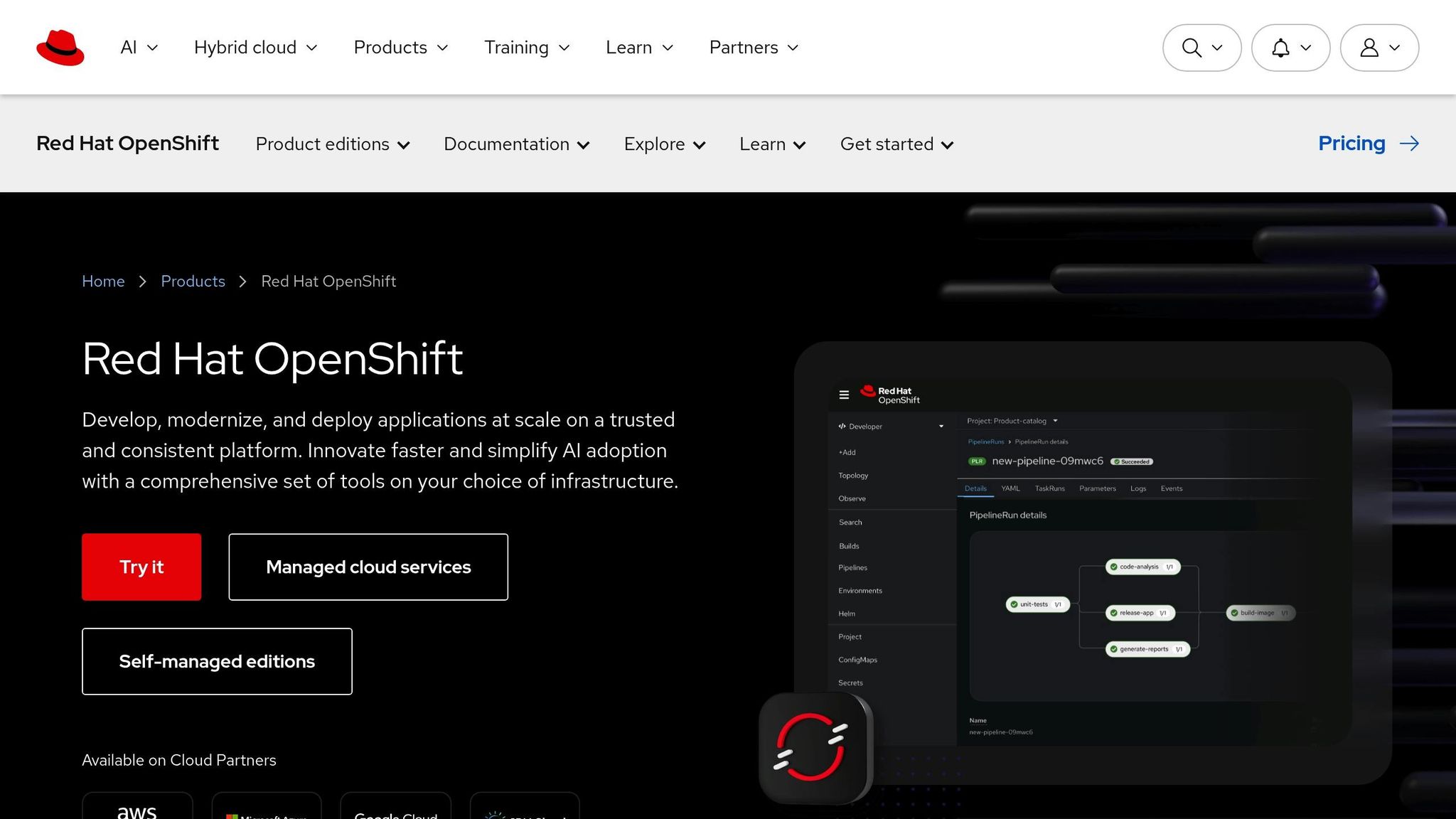
Koku is an open-source tool designed for hybrid clouds, OpenShift clusters, and public cloud setups. It aggregates billing data, normalises costs, and attributes them to departments or projects using custom pricing models[2]. This platform is ideal for enterprises managing mixed environments, offering visibility without vendor lock-in. Koku’s chargeback reports align spending with budgets, helping DevOps teams control costs across complex infrastructures. Organisations using Koku in OpenShift environments have achieved 15–25% savings by tracking hybrid usage and ensuring costs stay within budget[2]. The platform also supports FinOps practices, making it easier to understand and manage spending in multi-hosting models.
Hokstad Consulting's Approach to Deployment Cost Reduction
Cloud Cost Engineering Services
Hokstad Consulting begins by conducting a cloud cost audit that connects billing data with deployment activities. They gather billing reports and align them with metadata from CI/CD systems like GitHub Actions, GitLab CI, or Jenkins. This metadata includes timestamps, commit references, and details about affected environments. The result? Time-synced views that reveal how each release impacts spending. For example, a deployment might increase storage costs by 25% or reduce network egress by 15%. Key metrics, such as average cost per deployment by environment and cost differences between successful and failed deployments, help quantify the financial impact of various release strategies, including blue/green deployments or rolling updates.
Hokstad also integrates cost visibility directly into CI/CD workflows. Engineers can access pre-deployment cost estimates within Terraform pull requests, allowing them to see the projected monthly cost impact of infrastructure changes before merging. Additionally, they automate the creation and teardown of temporary test environments for each branch, eliminating the expense of idle staging stacks. Techniques like change-based test selection and caching help reduce compute and storage costs within CI systems, particularly in large microservices environments. To promote cost awareness, Hokstad provides dashboards that highlight the cost impact of each pipeline run, laying the groundwork for advanced automation.
Custom Automation and AI Solutions
Hokstad takes these insights and develops tailored automation solutions for each client’s toolchain. Common examples include automating the scaling down of non-production environments and cleaning up unused resources, such as unattached volumes, idle load balancers, or abandoned Kubernetes namespaces. They also implement deployment gates that leverage real-time cost data to block or warn against deployments exceeding budget thresholds. For instance, this could prevent oversized instances from being introduced into staging for minor feature tests.
Their AI-driven approach adds another layer of efficiency. Anomaly detection models, tuned to deployment patterns, learn what normal cost behaviour looks like for each service. When costs spike or drop unexpectedly after a release, the system alerts the team. Additionally, AI tools analyse CI/CD jobs to identify those with poor cost-to-value ratios - for example, tests that rarely fail but are expensive to run. These tools generate prioritised recommendations, such as shifting workloads to more economical instance families or storage tiers, complete with estimated monthly savings and risk assessments. These AI agents integrate smoothly with existing dashboards and alerting platforms like Slack or Teams.
Solutions for UK Businesses
For UK organisations, Hokstad tailors its services to meet local needs. All cost reporting is provided in pounds sterling, and solutions comply with UK data regulations - an essential factor for companies handling sensitive customer data or operating in regulated industries. Hokstad claims its cloud cost engineering services can cut infrastructure costs by 30–50%, potentially saving businesses over £50,000 annually. Additionally, their DevOps transformation services can achieve up to 75% faster deployments and 90% fewer errors[1].
All automation is delivered as infrastructure-as-code or GitOps-managed components, ensuring UK teams can independently manage and maintain these solutions after implementation. This approach not only ensures compliance but also empowers organisations to sustain long-term savings and efficiency.
Need help optimizing your cloud costs?
Get expert advice on how to reduce your cloud expenses without sacrificing performance.
How to Integrate Deployment Cost Analysis Tools
Building a Cost Analysis Framework
A solid cost analysis framework is built on four layers: data sources, consolidation, analytics, and governance [2][3]. For data sources, you can use tools like Infracost to estimate infrastructure-as-code expenses, OpenCost or Kubecost for Kubernetes cost attribution, and billing exports from cloud providers such as AWS, Azure, or GCP. Consolidate this data in a centralised platform or data warehouse, organised by tags, service names, environments, and deployment IDs [2][3][4].
Once your data is centralised, analytics tools like Grafana or Looker can create dashboards that highlight essential metrics, such as per-deployment costs, costs per customer, and anomaly detection. These dashboards often rely on data from OpenCost via Prometheus and cloud billing exports [2][3]. Finally, governance ties everything together by integrating these insights into your CI/CD pipelines. For example, you can use Infracost checks on pull requests, budget alerts, and approval workflows to compare pre-deployment estimates with actual costs [2][3]. With this framework in place, ensure your reporting and governance practices align with the insights generated.
Instrumentation and Reporting Best Practices
Reliable cost reporting starts with a consistent metadata schema across all resources [2][3]. Establish global tags and labels such as environment (prod/stage/dev), team, service, application, deployment_id, cost_centre, and business_unit. These ensure every deployment is uniquely identified across cloud resources, Kubernetes workloads, and CI/CD artefacts. Enforce these standards through infrastructure-as-code modules and Kubernetes admission controllers [2][3].
For businesses in the UK, set systems to report costs in pounds sterling. Use native GBP pricing where available or apply a centrally managed exchange rate [2]. Additionally, convert timestamps from UTC to the Europe/London time zone in dashboards. This adjustment helps align cost data with local business hours, making it easier to interpret cost trends [2].
Governance and Workflow Integration
Once you’ve established robust instrumentation, embed governance into your CI/CD pipelines to manage costs in real time. Automating governance works best when implemented as checks within your CI/CD workflows [2][3]. For instance, integrate Infracost into your CI/CD processes (e.g., GitHub Actions, GitLab CI, Azure DevOps) after running terraform plan. This step allows you to display cost differences in GBP directly on pull requests [2]. Pipelines can be set to fail if projected cost increases exceed predefined thresholds (e.g., £500 per environment) or if required tags are missing [2].
To make Kubernetes cost tracking seamless, deploy OpenCost in each cluster and connect it to Prometheus. Standardise labels at the namespace or workload level to ensure costs align with your monthly cloud bill [2][3]. Additionally, schedule fortnightly release reviews where engineering leads review deployment costs alongside reliability metrics. These reviews can lead to actionable steps like rightsizing resources or decommissioning unused environments [2]. By embedding cost considerations into your routine processes, you can shift from reactive cost management to proactive cost control.
Conclusion
Key Takeaways
Analysing deployment costs is a game-changer for UK businesses, offering clear insights into spending. Tools like Infracost help detect cost increases during code reviews, while platforms such as OpenCost, Kubecost, and Koku provide real-time cost attribution and chargeback solutions for hybrid environments. Cloud billing platforms also play a crucial role, enabling businesses to forecast expenses and manage budgets more effectively. By monitoring and optimising resources - like rightsizing or eliminating idle instances - companies can achieve savings of 20–40% [2][3]. For UK organisations, this means working in pounds sterling, scaling resources using metric units, and aligning cost data with local business hours in the Europe/London time zone. This level of cost transparency is vital for making informed, strategic decisions.
Hokstad Consulting takes this a step further by offering tailored cloud cost engineering services specifically for UK businesses. Their expertise spans DevOps transformation, custom automation, and AI-powered solutions, often cutting infrastructure costs by 30–50%. They also accelerate deployment cycles and enhance system reliability. What’s more, their pricing model allows fees to be capped as a percentage of the savings achieved, making it a low-risk investment for businesses looking to optimise their cloud spending.
FAQs
How does adding cost tracking to CI/CD workflows improve deployment efficiency?
Integrating cost tracking into CI/CD workflows offers real-time visibility into deployment costs, enabling teams to identify inefficiencies early in the process. This forward-thinking approach supports more informed decisions about resource allocation and helps cut down on wasteful spending.
By automating cost monitoring directly within the pipeline, teams can streamline deployments, speed up release cycles, and keep budgets on track. The result? Greater financial oversight and improved day-to-day operations.
What are the advantages of using Kubernetes-focused tools like OpenCost and Kubecost for managing deployment costs?
Kubernetes-centric tools like OpenCost and Kubecost are designed to provide detailed cost tracking by linking expenses directly to workloads, services, and namespaces. This granular approach helps DevOps teams pinpoint inefficiencies and fine-tune resource usage with greater precision.
In addition, these tools come equipped with real-time monitoring and deliver actionable insights. This empowers teams to make smarter decisions when it comes to scaling, budgeting, and managing overall costs. By simplifying these processes, they contribute to better operational efficiency and tighter control over deployment expenses.
What does Hokstad Consulting’s 'no-savings, no-fee' approach mean?
Hokstad Consulting operates with a 'no-savings, no-fee' policy, meaning you only pay if they successfully cut your costs. Their fee is calculated as a percentage of the savings they secure for your business.
This approach eliminates any upfront costs or financial risk. If they don’t deliver savings, you don’t pay a penny. It’s a straightforward, results-focused model aimed at achieving tangible benefits for your business.