::: @iframe https://app.wrapifai.com/embed/ae85c4 :::
Clear, practical risk scoring for everyday reviews
A good risk assessment tool should do more than generate a number. It should help people understand where the biggest threats sit, why they matter, and what to do next. This web-based solution gives teams a straightforward way to score likelihood and impact, classify severity, and rank risk items in a clean matrix-style view.
Built for business and operational use
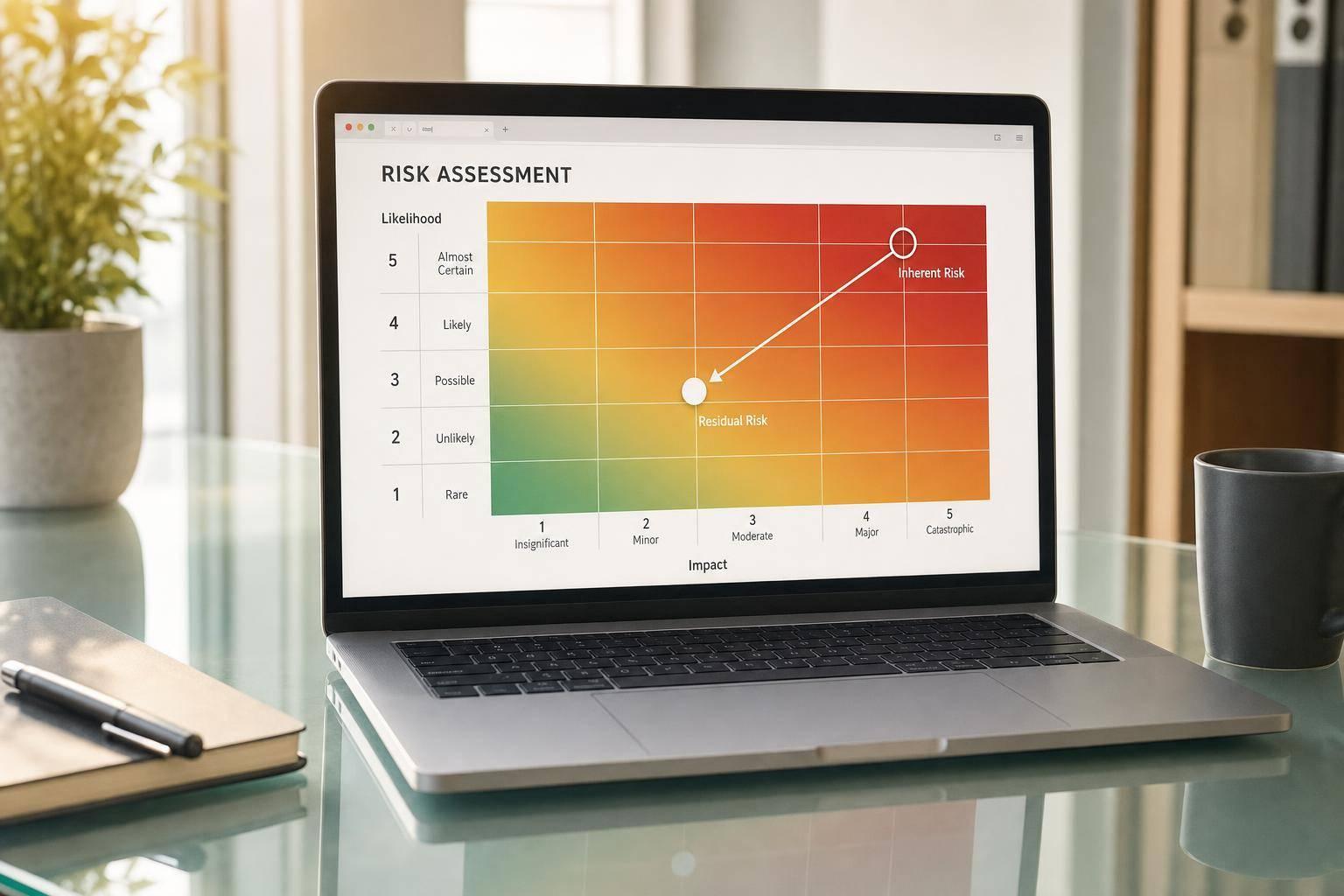
Whether you're reviewing a project, supplier, department, internal process or wider business activity, the tool makes it easier to compare risks consistently. Users can assess inherent exposure on its own or include control effectiveness to estimate residual risk. That means you can see both the raw level of concern and the level that remains after current controls are considered.
Transparent results you can act on
Every calculation is easy to follow, which is essential when you're discussing priorities with stakeholders. The ranked list highlights top issues first, while category summaries can reveal patterns across areas such as compliance, cyber, financial or operational risk. If you need a practical risk matrix calculator for regular reviews, this tool offers a clear, usable structure without unnecessary complexity. It helps teams turn a routine risk assessment into a sharper decision-making exercise.
FAQs
How is the risk score calculated?
Each item starts with an inherent risk score based on likelihood multiplied by impact. That gives you a simple and widely understood way to compare risks across a project, process or department. If you choose residual mode and enter control effectiveness, the tool applies a clear reduction method so stronger controls lower the remaining exposure. The calculation stays visible, which makes the result easier to review with stakeholders.
What’s the difference between inherent and residual risk?
Inherent risk is the level of risk before you consider any controls or mitigation already in place. Residual risk is what remains after those controls are taken into account. Using both views can be helpful because it shows not only how serious a risk could be, but also whether current controls are doing enough to reduce it to an acceptable level.
Who is this tool suitable for?
It works well for project teams, operational managers, compliance staff, procurement teams reviewing vendors, and anyone running a structured risk review. Because the scoring model is simple and the output is ranked clearly, it suits both formal business assessments and practical day-to-day operational reviews. You can use it for a one-off assessment or as a repeatable framework across different areas of the organisation.