::: @iframe https://app.wrapifai.com/embed/fb6124 :::
Smarter AI governance starts before deployment
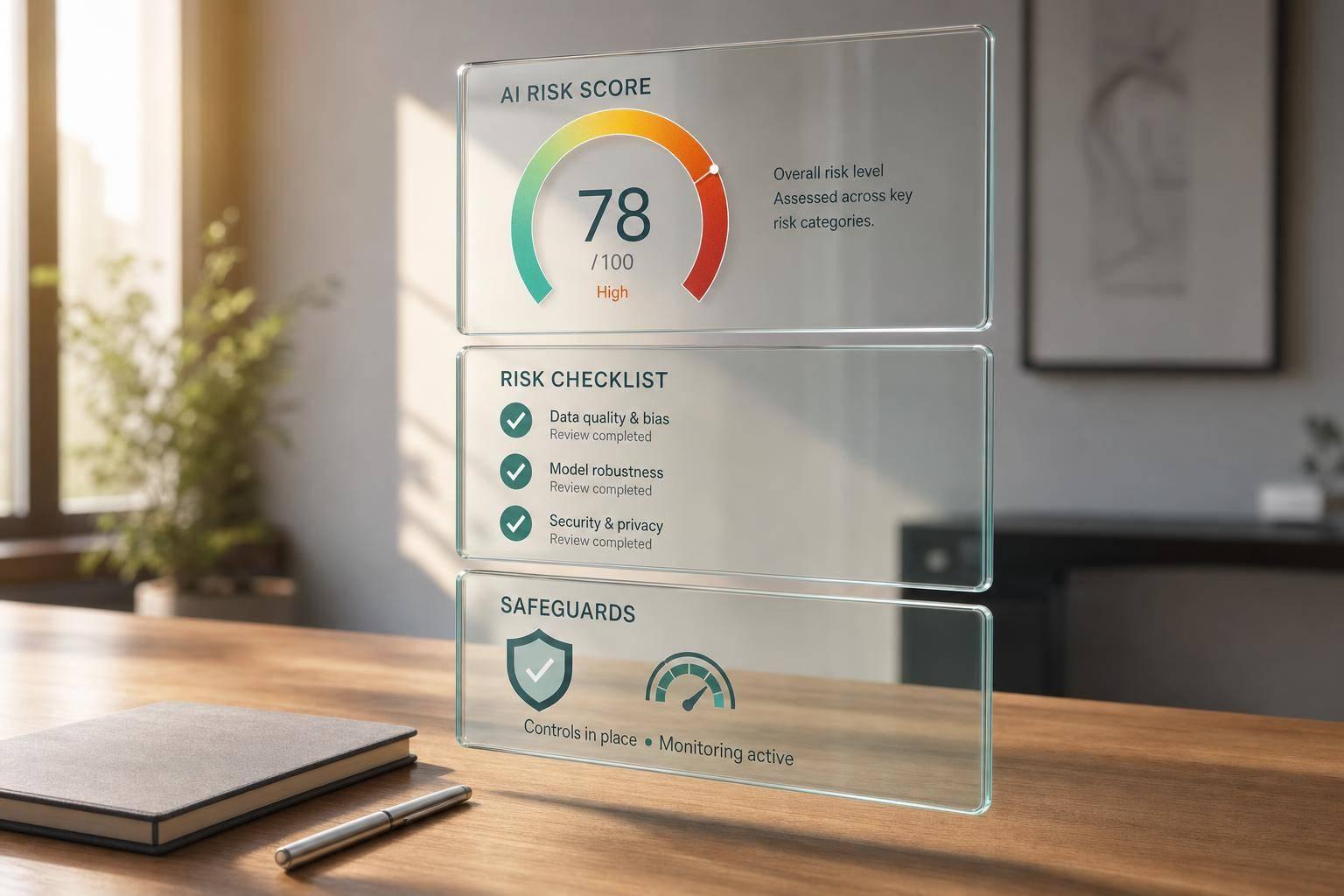
An AI risk assessment tool gives organisations a practical way to review a proposed use case before it reaches production. That matters because AI risk rarely sits in one place. A single project can raise questions around privacy, fairness, security, transparency, legal exposure, and reputational harm all at once.
A clearer way to evaluate AI use cases
This tool is designed for real business decisions, not academic theory. Teams can enter the purpose of the system, the kind of data involved, the likely impact on people, and the level of human oversight. From there, it produces a structured risk profile that’s easy to understand and share internally.
Useful for governance, compliance, and delivery teams
A strong AI risk assessment process helps organisations prioritise review effort, catch high-risk conditions early, and document why a use case may need extra controls. That could include better oversight, tighter access controls, stronger vendor due diligence, or clearer explainability requirements.
Because the output is written in plain English, this AI risk assessment tool is useful for product owners, compliance teams, legal reviewers, and senior stakeholders alike. It supports better internal conversations without pretending to replace formal legal or regulatory advice.
FAQs
How does this AI risk assessment tool decide whether a use case is low or high risk?
The tool looks at the context around the AI use case rather than judging it on a single factor. It weighs elements such as the type of data being used, whether that data is personal or sensitive, how much impact the system could have on people, the level of human oversight, model transparency, security concerns, and any compliance exposure. A use case handling regulated data with high-impact decisions and limited oversight will naturally score higher than one used for low-stakes internal support. The aim is to give teams a structured, understandable view of risk before implementation.
Is this tool suitable for compliance or legal sign-off?
It’s best used as an internal screening and governance aid, not as legal advice or a substitute for formal review. The assessment helps teams identify where extra scrutiny may be needed, highlight obvious red flags, and prepare better conversations with legal, compliance, security, and risk stakeholders. In practice, that means it can save time and improve decision-making, but final approval should still sit with the appropriate internal experts.
Who should use this tool inside an organisation?
It’s useful for product teams, innovation leads, compliance managers, data protection officers, security teams, procurement teams, and business owners exploring a new AI use case. One of its strengths is that it explains the logic in plain language, so non-specialists can take part without needing deep technical knowledge. That makes it easier to create a shared view of risk across legal, technical, and operational teams before an AI system goes live.